
Why Genetic Testing Matters
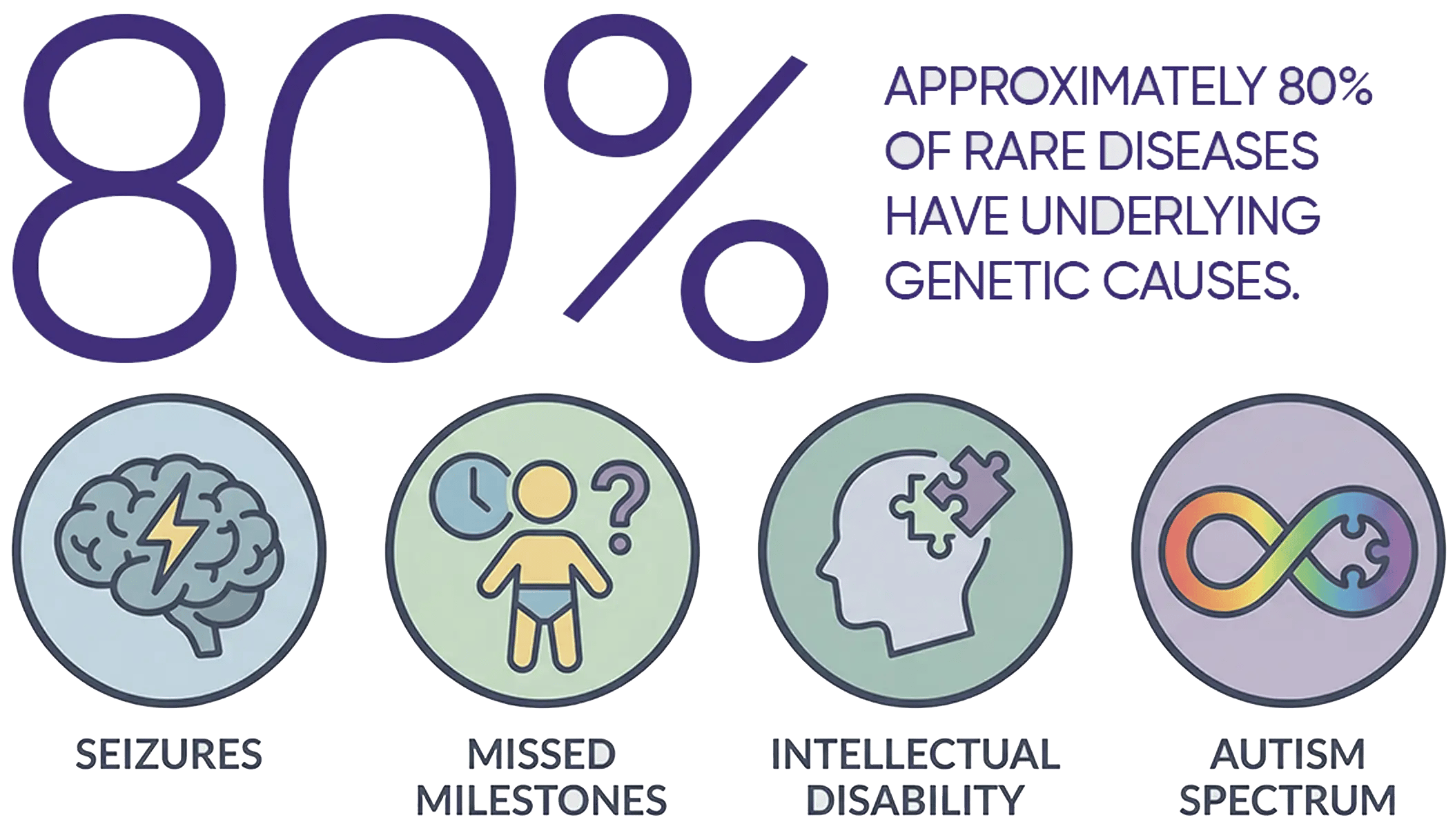
Approximately 80% of rare diseases have underlying genetic causes1. Genetic testing may help uncover an underlying cause, bringing clarity to what may have felt confusing or uncertain. If you or someone you love has unexplained symptoms (such as seizures, missed developmental milestones, or intellectual disability), the cause could be genetic.2 3 Genetic testing may also be helpful for individuals diagnosed with:
- Create a more personalized care or treatment plan
- Improve treatment options (up to 80% of patients with epilepsy received improved treatment after a genetic diagnosis4)
- Potentially reduce symptoms (some patients experienced up to 90% fewer seizures4)
- Connect with others who share the same diagnosis
- Identify clinical trial opportunities
- Support insurance coverage for therapies or equipment
When Might Testing Be Appropriate?

Genetic testing may be helpful for children or adults who have experienced any of the following:
- Seizures or epilepsy
- Delays in learning, growth, or development
- Intellectual disability
- Conditions present at birth (such as cleft palate or heart conditions)
- Trouble gaining weight or growing as expected
- Muscle tone differences (such as low muscle tone or stiffness)
- Hearing or vision concerns
- Autism or traits of autism
- Possible metabolic or mitochondrial conditions (conditions that affect how the body produces energy)
Genetic testing may also be helpful for individuals who have ongoing symptoms or have completed multiple medical tests or procedures but still do not have a clear diagnosis.
What Is Exome & Genome Sequencing?

Not all genetic tests are the same.
- Chromosomal Microarray (CMA) looks for small deletions or duplications in DNA.
- Panel tests analyze selected genes associated with a specific condition.
- Exome sequencing analyzes more than 22,000 genes.
- Genome sequencing analyzes nearly all of a person’s DNA, including coding and non-coding regions.
Exome and genome sequencing are more comprehensive than panel testing or CMA.
Clinical Guidelines
 Leading medical organizations recommend exome or genome sequencing in certain cases:
- The American College of Medical Genetics and Genomics (ACMG) recommends exome/genome testing as a first-line test for children with developmental delays, intellectual disabilities, and congenital anomalies.
- The National Society of Genetic Counselors (NSGC) recommends exome or genome sequencing for unexplained epilepsy (supported by the American Epilepsy Society).
- The International Precision Child Health Partnership recommends rapid exome/genome testing for certain NICU patients with unexplained hypotonia.
Cultural & Ethical Considerations
Medical Mistrust Due to Historic Harm

Historical gaps in medical research and healthcare delivery have left lasting impacts on many communities, particularly Black, Indigenous, immigrant, and disability communities. Non-consensual experimentation and misuse of biological samples have understandably contributed to mistrust.
Acknowledging this history is not about dwelling in the past—it is about building a more ethical future.
Today’s standards require:
- Voluntary participation
- Informed consent
- Institutional Review Board (IRB) oversight
- Ethical safeguards to prevent exploitation
Trust is rebuilt through transparency, accountability, and community engagement.
Genetic Data Privacy & Protection

A common question is: Who will have access to my genetic information?
Genetic test results are part of your medical record and are protected under federal privacy laws, including HIPAA.
Before testing, you may want to ask:
- Who will see my results?
- How long will my data be stored?
- Will my sample be used for research?
- Can I opt in or out of future research use?
Informed consent is not just a form—it is a conversation.
Genetic Testing Support and Financial Assistance
GeneDx Financial Assistance Program
Helps reduce out-of-pocket costs for clinical genetic testing for rare and complex conditions.
PreventionGenetics Sponsored Genetic Testing Programs
PreventionGenetics (now a subsidiary of Exact
Sciences) partners with pharmaceutical and disease advocacy groups to provide no-cost genetic testing programs for specific rare conditions when clinical eligibility criteria are met (e.g., inherited retinal disease, cholestasis, familial chylomicronemia syndrome, dystrophic epidermolysis bullosa, and more).
Caregiver Action Network + Probably Genetic
Offers no-cost clinical-grade whole exome sequencing plus genetic counseling for eligible patients with medically complex conditions.
My Faulty Gene Assistance Grants
Provides small grants to help cover the costs of diagnostic genetic testing for individuals facing financial barriers.
No-Cost Genetic Testing Programs
(e.g., My Retina Tracker)
Advocacy-linked initiatives like the My Retina Tracker Genetic Testing Program offer no-cost genetic testing and counseling for people with inherited retinal diseases through nonprofit partnerships and sponsored testing programs.